


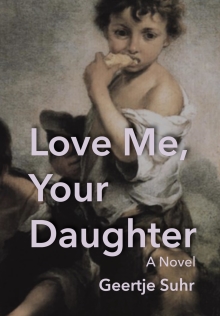
Love Me, Your Daughter
 polytekton
Subscribe and get exclusive content and bonus scenes, free books, advanced reader copies and more
Love Me, Your Daughter
polytektonSubscribe and get exclusive content and bonus scenes, free books, advanced reader copies and more
About
An Excerpt from the Book
Only after my mother’s death did I find the strength to write about my unknown war criminal father without hiding behind the mask of a Gorda Selig. I called the report “Baby in the Third Reich.”
Baby in the Third Reich
When an American woman said to me: “As a German, you are guilty of the crimes of the Third Reich,” I replied: “I was a baby in the Third Reich, how can I be guilty?”
“But your parents are guilty,” she objected adamantly.
“Do you know how old my mother was when Hitler came to power?” I asked her.
“Well?”
“Eighteen years old. And my friend Petra’s mother, for example?”
“Well?”
“She was thirteen years old, and ten years later, her husband was killed in the war. War widow at twenty-three years of age, with two children.” All guilty?
Chancellor Kohl has spoken of the ‘mercy’ of late birth. My mother often made fun of this grace, as did most Germans at the time. Because everyone was supposed to be guilty, the early-born and the late-born. Or all innocent? Or did the Germans, who hardly believed in God, detest the Christian word ‘grace’?
And it did seem to me a grace to be born late, preferably forty, sixty, hundreds of years after the twelve years of the Thousand-Year Reich, the devil’s kingdom, one should rather say. Guilty to the third and fourth generation, it says in the Old Testament. And in the New Testament?
I belong to the first generation after the ‘Great German Fall of Man’. And I have felt guilty, although I was only a baby in the Third Reich. When did my feelings of guilt begin? I must have been fourteen years old when I saw Alain Resnais’ film on TV at my aunt’s house. I think it was called Through Night and Fog. Or simply Night and Fog. There sits the young girl, almost still a child, watching railroad trains stuffed full of hideously emaciated people staring out of the cars with their huge, suffering eyes. Living skulls on their way to death. Then, again and again, piles of corpses. Pits full of corpses. Gas chambers and piles of corpses. American or English soldiers next to piles of corpses. Horrified faces of young women next to piles of corpses. They hold their noses. They run away. The girl goes into the next room and says to her mother and aunt: “Come over here, I see something terrible here. How they gassed all these people.” The mother lowers her eyes. The aunt stares into her coffee cup. Neither one of them get up.
“Yes, yes,” says the mother.
“Leave it be,” says the aunt. “We’ve heard that before.”
The girl knows: she will never forget these piles of corpses. Not until death. And she will say a hundred times and more to her mother: “How could the Nazis gas millions of people? Didn’t they have a conscience? That will never be forgotten, not until the death of mankind. This is the most horrible thing that people have ever done to people.”
And the mother lowered her eyes. And never said anything. But at some point, she said: “It was the English who invented the concentration camps. It was during the Boer War. A lot of people died there...”
“Boer War, Boer War!” I shouted. “That excuses nothing!”
And my mother kept her eyes lowered. The history of my feelings of guilt started at age fourteen, in front of my aunt’s television. The feelings of guilt that I sometimes denied, like that time in front of this American acquaintance with my defiant words: “I was just a baby in the Third Reich.”