11 min read

What you'll learn
Why professional author websites are essential in 2025
Website features that convert visitors into book buyers
How to choose the right platform without tech overwhelm
Design mistakes that kill author credibility
Free vs paid options
There comes a moment in every writer’s journey when the thought of creating an author website arrives like a quiet storm, unsettling in its inevitability. You may tell yourself you can wait, that simply listing your books on Amazon or relying on social media will be enough to grow your fan base. But deep down, you know the truth: if you wish to be seen as a professional—whether you are self-published or an established bestselling author—you will need your own website, a place that reflects your voice and your vision.
If you’re a writer in 2025, you already know that building an author site can feel overwhelming. Between learning about author website design, comparing website builders, and figuring out how to showcase your book covers, many authors freeze before they even start. But here’s the good news: today’s tools make it simpler than ever to claim your domain name, present your author photo with confidence, and launch a polished, user-friendly site, without needing to hire an expensive developer or learn to code.
In today’s fast-moving world of self-publishing, your website isn’t optional. It’s the home base of your online presence, the one place you fully own and control, unencumbered by shifting algorithms or disappearing social platforms.
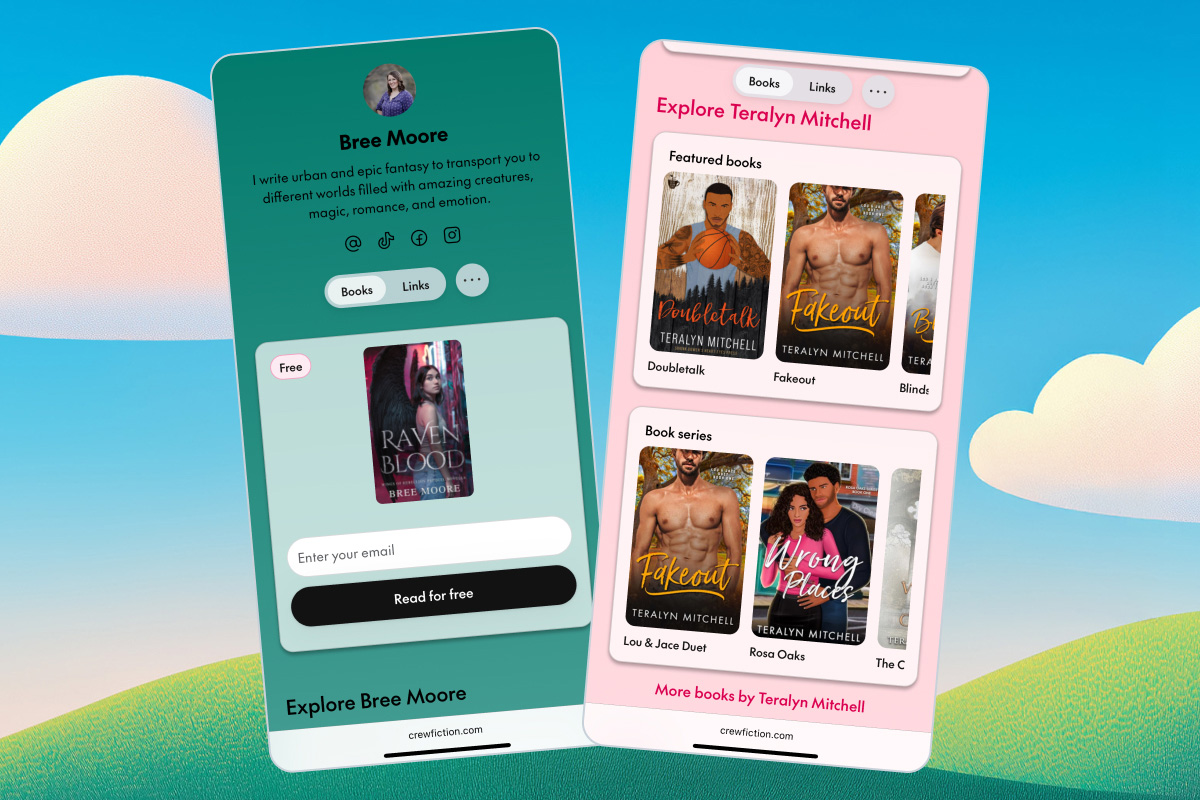
An author website is far more than a static landing page. It is the living hub where your work, your story, and your readers converge. At its heart, it provides four powerful advantages no serious writer should ignore:
When you have your own domain name and platform, you decide what your audience sees. Your homepage, your book marketing, and your email list all belong to you—offering stability no social platform can match.
Your author page becomes the anchor for everything you create: short stories, your debut novel, your entire book series—all beautifully presented with intentional web design and consistent fonts that reinforce your brand. A great landing page lets you showcase your author photo, your personal story, and your full catalog in one place.
A well-optimized site improves your chances of appearing when someone searches for your name, your books, or keywords in your genre. The best author websites rank high because they’re structured for both SEO and a great user experience.
Most crucially, your site allows you to build a newsletter signup—a direct line to your audience that no algorithm can sever. Whether you’re launching a new book, sharing exclusive pricing, or offering bonus content, your mailing list nurtures loyalty and drives sales.
While every author website is unique, the most effective and professional ones share a few essential elements:
Tell the story behind your author name with an authentic and optimized author bio. Share your background, inspiration, and writing journey. A compelling introduction, paired with a professional headshot, helps readers feel they are meeting you in person.
Create a separate page for each title with large book covers, engaging blurbs, pricing details, and purchase links to Amazon or other retailers. Well-designed book pages also help with SEO and make buying effortless.
Your mailing list is your most powerful book marketing tool. Offer a lead magnet—a free short story, bonus chapter, or exclusive discount—to encourage signups and grow your fan base independently of any platform.
Make it simple for readers, media, and event organizers to reach you. Include a clear contact form and any relevant professional information.


The easiest way to get a beautiful website up and running, synced with your books and book series automatically.
Think your website is just a fancy business card? Think again. Here are three authors who turned their sites into powerful tools that actually sell books:
Joanna Campbell Slan, New York Times bestselling author, does something smart—she gives away the first book in her series for free, right on her homepage.
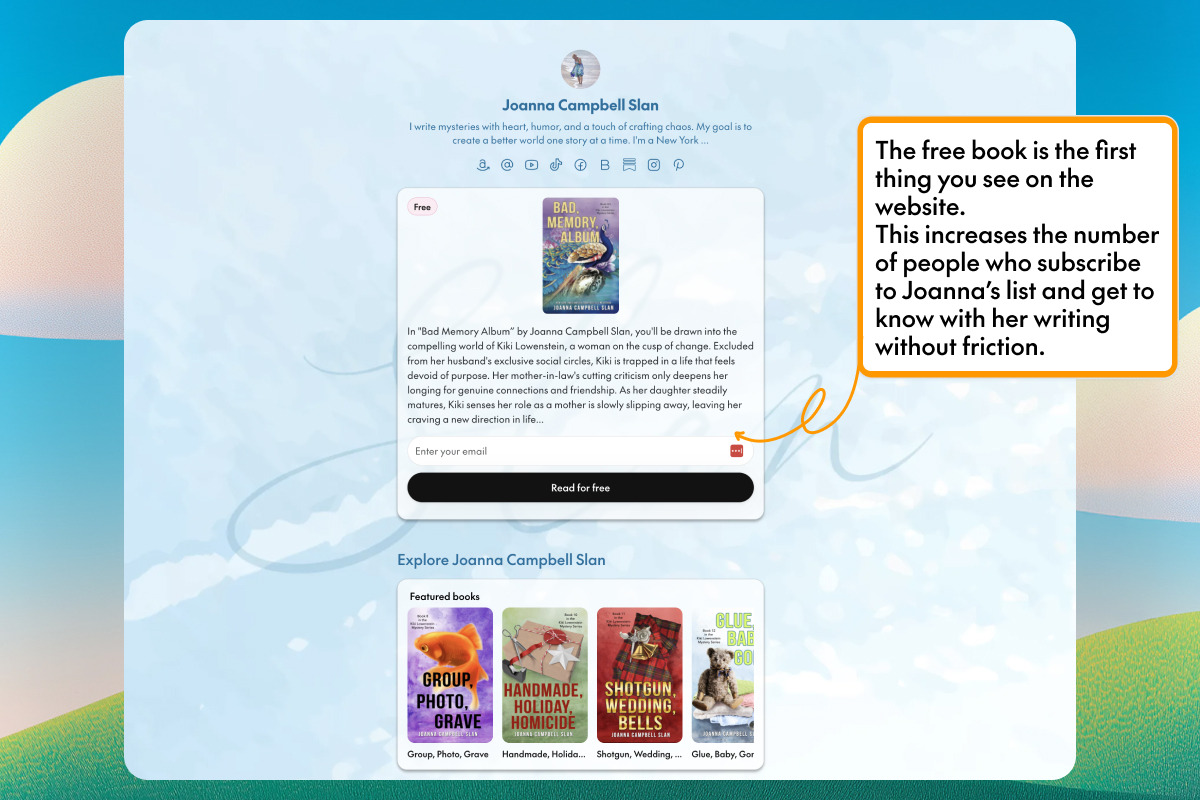
Here's why this works: When readers can try your writing without risk, they're more likely to buy the rest of your series if they like what they read. Joanna owns her reader list this way, instead of hoping Amazon's algorithm shows her books to the right people.
Example 2: Stop Losing Social Media Followers
Mina Brower posts constantly on social media, but she's smart about it. Instead of sending followers to a dozen different links, everything points to her website.
.jpg)
When someone finds Mina on Instagram, they land on one clean page with all her books, her newsletter and ARC signup, and her social links. No confusion, no lost sales.
This matters because most authors lose potential readers in the chaos of multiple platforms. Mina captures them all in one place she actually controls.
E.J. Campbell shows exactly how to use social proof. Her site features real reader reviews and a compelling about page that makes you want to know her story.
.jpg)
When potential readers see genuine reviews and connect with her personally, they're far more likely to click through to Amazon and actually buy. It's the difference between browsing and purchasing.
Besides, her custom theme (background image and colors) makes readers feel like they're already inside one of her books the second they land on the page.
Your website isn't decoration—it's your most important sales tool. Unlike social media, you own it completely. Unlike Amazon, you control what readers see first.
Start simple: showcase your books, collect email addresses, and give readers a reason to stick around. Everything else can come later.
The thought of building your own website can feel intimidating, but modern platforms have made the process accessible to everyone. Here are some of the most popular options:

Easy and full of features!
Setting up my author page was effortless and enjoyable. CrewFiction's tools are intuitive, and the team's support goes above and beyond, making them a standout in author platforms.
—Stephanie Lake, Fiction Author
.jpg)
Crewfiction give you the best of all worlds:
Import your books and book series with a single-click
Professional, and beautiful author-focused templates
No code required
Built-in email and community-building tools
ARC management and reader magnets
Tools to grow your audience and get more readers
All-in-one book marketing platform
We’ve taken everything an author needs to build an amazing website—compelling book pages, seamless newsletter integration, polished design, reliable hosting, and intuitive tools—combined it into one streamlined platform. With crewfiction, you don’t have to piece together plugins, themes, or complicated settings. You can focus on telling your story, while we handle the rest.
Even the best intentions can lead to missteps. Watch for these common pitfalls:
Cluttered pages, mismatched fonts, and low-resolution images hurt your credibility. Keep your layout clean and modern.
More than half your traffic will come from mobile devices—make sure your site is optimized for small screens.
If readers can’t find buy buttons, email signups, or your contact info quickly, they’ll leave. Keep CTAs visible on every page.
Relying solely on Amazon or social media means you don’t own your audience. Start building your email list from day one.
In 2025, every serious writer needs a professional author website. It’s your gateway to:
Ready to start?
Want to launch your author website today—without coding headaches?
Claim your crewfiction author site and start building your author platform in minutes.
A clear, professional homepage with your author name, polished book covers, compelling blurbs, and simple paths for readers to buy your books or join your mailing list.
At minimum: an author bio, book pages, an email signup form, and contact information. Optional extras like a blog, event calendar, and media kit can further enhance your online presence.
Absolutely. A well-designed website pays dividends in credibility, reader engagement, and sales—especially if you’re self-publishing and need to stand out in a crowded market.


