
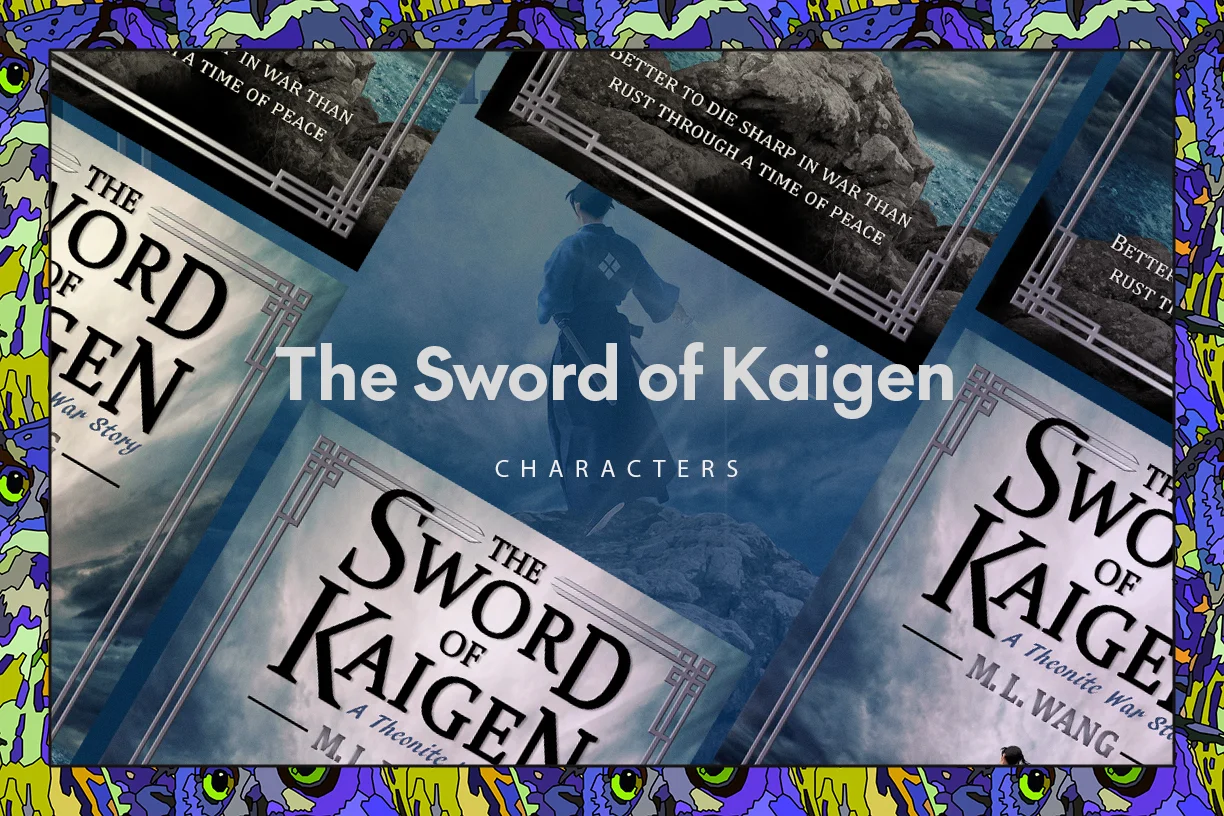
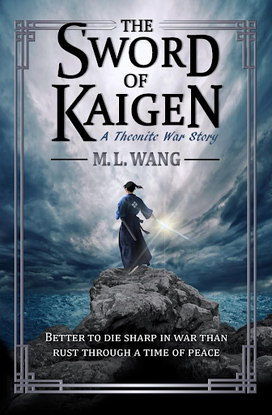
M.L. Wang’s The Sword of Kaigen, winner of the SPFBO 2019–2020, is a character-driven high fantasy novel set on the snowy Kunasagi Peninsula of the Kaigenese Empire. It is both an epic war story and an intimate portrait of a warrior family caught between tradition, secrecy, and survival.
This Japanese-inspired fantasy book works as a standalone in the world of the discontinued Theonite series, told through alternating POVs between mother and son. It blends sweeping battles with flashbacks to lost loves, secret pasts, and hidden powers. Its explosive action—steeped in martial arts(think Fonda Lee’s Jade City meets the last Airbender’s elemental magic)—is rivaled only by its devastating emotional impact.
If you’re looking for the full narrative arc, start with our Sword of Kaigen Summary & Themes. For more M.L. Wang, don’t miss our Blood Over Bright Haven summary. And if you love books that tackle propaganda and trauma, check out R.F. Kuang’s The Poppy War trilogy.
Spoiler Warning: This article contains major character revelations, including deaths.
Known formally as Matsuda Misaki, she is the beating heart of the novel. To outsiders, she is a dutiful housewife—a mother of four and the silent wife of Takeru. But her past, revealed through flashbacks, shows a different life: one of combat, freedom, and passion during her training years abroad in Carytha.
Misaki carries bloodline magic—blood manipulation—which she conceals out of fear. She passes it on to Mamoru but warns him never to use it, as it would tarnish the Matsuda clan’s obsession with purity. Her arc is one of suppression and rebirth: when the invasion comes, she sheds the mask of a submissive wife and becomes the warrior she has always been.
Her story is as much about grief and resilience as it is about combat. Misaki’s character development makes her one of the strongest female protagonists in modern fantasy.
Mamoru, the eldest son of the Matsuda family, embodies the hopes of the clan. From the opening, we see his drive: the grueling climb of 821 steps to Kumono Academy each day mirrors his relentless determination. But Mamoru is not just a student—he is a young man caught between tradition and truth.
Through his friendship with Kwang, Mamoru learns that the Kaigenese Empire has deceived its people. This revelation shakes him but also strengthens his resolve. Unlike many of his peers, he does not cling blindly to tradition—he chooses to act.
When the Ranganese invasion reaches Takayubi, Mamoru steps into the role of protector. He fights not only for his clan but for his entire village, giving his life in one of the most heroic sacrifices of the novel. His duel against a powerful soldier is brutal and costly, but his final stand truly makes a difference—buying time for others to fight, saving countless lives, achieving the Whispering Blade, and proving himself as worthy of the Matsuda name.
His sword, later named Mamoriken (“Protector”), becomes a symbol not just of his bravery but of the truth that even the youngest, when fueled by love and duty, can alter the fate of many. Mamoru’s sacrifice transforms the novel: it is the moment where family, tradition, and propaganda collide, leaving devastation but also hope.
As the head of his household, Takeru is the archetype of a Matsuda man: disciplined, distant, and utterly bound to duty. To his children, he is a stern wall. To Misaki, he is an unfeeling husband. His coldness is the reason Misaki carries so much alone.
But Wang reveals that beneath his stoicism lies something rawer: fear. In one of the novel’s most memorable scenes, Misaki and Takeru duel after Mamoru’s death. For the first time, Takeru breaks. He admits that his silence and hardness were not true strength but cowardice—his way of protecting himself from pain.
This confession reframes him. Far from being a villain or a caricature of patriarchy, Takeru is a man crushed by tradition, afraid of his own vulnerability. His reconciliation with Misaki is quiet but powerful. Together, they rebuild—not through passion, but through honesty. It is one of the rare portrayals of marriage in fantasy books that feels painfully, beautifully real.
Though not a warrior in the traditional sense, Setsuko is vital to Misaki’s survival. When Misaki spiraled into depression after miscarriages, Setsuko’s kindness and openness pulled her back. She offered compassion in a household defined by silence, proving that strength comes in many forms.
During the invasion, Setsuko’s story becomes intertwined with tragedy. Her husband—one of the strongest Matsuda warriors—dies in battle. His death unleashes the most explosive jiya release ever witnessed, a devastating outpouring of elemental power that leaves a mark on the battlefield and on Setsuko’s life.
Her grief is immense, but she does not collapse under it. Instead, Setsuko becomes a steadying force for Misaki and the surviving children. Her resilience makes her one of the novel’s most underrated but essential characters.
Kwang is the boy who changes everything for Mamoru. His foreign clothes, accent, and frankness make him stand out, but it is his honesty that matters most. Having traveled outside the Empire with his father, Kwang knows the truth: the Kaigenese Empire is not invincible. Its people have been used and lied to.
Kwang’s courage in speaking these truths sparks Mamoru’s awakening. His role may be secondary, but without him, Mamoru’s arc—and much of the novel’s heart—would never ignite.
Takashi, Takeru’s elder brother, is the head of the Matsuda household. He represents the crushing weight of bloodline responsibility and the unyielding grip of tradition. Though he receives less page time, his position shapes the clan’s identity, and his death—like so many others—underscores the human cost of loyalty to an empire that does not value them.
Yukino Dai, Mamoru’s sensei at Kumono Academy, is more than just a teacher. As Hyori’s husband, he is tied to the Matsuda family, representing the tight weave of Takayubi’s social fabric. His authority and discipline reinforce the martial values of the clan, making him a figure of both respect and loss when war tears through the village.
Robin, nicknamed the Firebird, is Misaki’s old friend from her Carytha days. She embodies freedom and fearlessness—the life Misaki might have lived had she not married into the Matsuda clan. Her return to Takayubi reconnects Misaki with her past self and reminds her that even in devastation, bonds of friendship can endure.
Hyori, wife of Yukino Dai and friend to Misaki and Setsuko, is part of the circle of women who provide one another emotional refuge. Her role is quieter, but she reflects one of the novel’s great truths: survival in Kaigen requires not just warriors but networks of care and compassion.
Hiroshi, Nagasa, Izumo: Mamoru’s younger brothers, heirs to the Matsuda name. Their presence underscores the weight of inheritance and the fragility of future generations.
Mamoru’s friends at the academy. Their youthful struggles and camaraderie highlight the ordinariness of adolescence, making the tragedy of Mamoru’s fate even starker.
M.L. Wang’s The Sword of Kaigen is more than a war epic—it is a study of love, grief, and the resilience of a warrior family. From the snowy slopes of the Kusanagi Peninsula to the explosive battles of the invasion, its main characters carry both the burden of tradition and the fragile hope of change.
If you’re building your next TBR, this character-driven fantasy book with amazing worldbuilding deserves a spot at the very top.
For more, make sure to join crewfiction and get our Tea & Cakes Newsletter.

